
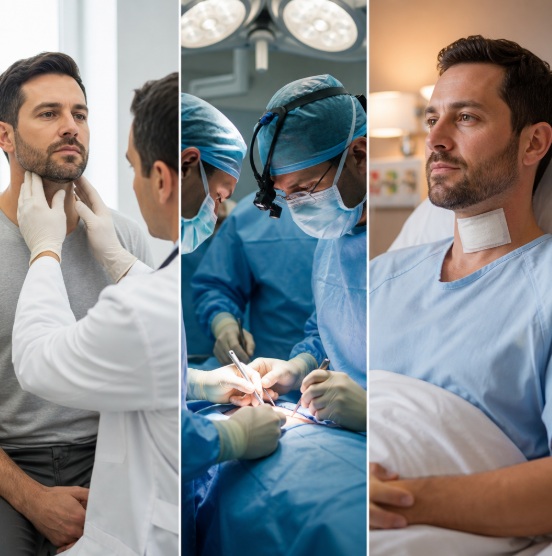
Thyroid surgery is one of the most commonly performed endocrine procedures worldwide, yet many patients approach it with significant uncertainty. Whether the surgery is recommended for a benign nodule, hyperthyroidism, or a confirmed malignancy, understanding the full arc of the experience — from preoperative preparation to long-term recovery — can meaningfully reduce anxiety and improve outcomes. This guide walks through each phase of the process with clarity, drawing on current clinical standards and patient-centered care principles.
Understanding Why Thyroid Surgery Is Recommended
The thyroid gland, a butterfly-shaped structure at the base of the neck, regulates metabolism, heart rate, body temperature, and a host of other critical functions through the hormones it produces. When this gland develops nodules, becomes overactive, or harbors cancerous cells, surgical intervention may become the most appropriate course of action.
Physicians typically recommend thyroid surgery in several scenarios: when nodules are large enough to cause difficulty swallowing or breathing, when fine needle aspiration biopsy returns suspicious or malignant results, when Graves’ disease or toxic multinodular goiter does not respond adequately to medication or radioactive iodine therapy, or when a patient prefers surgery over long-term medical management. In each case, the decision is made collaboratively between the patient and a multidisciplinary team that includes endocrinologists, surgeons, and often oncologists.
Types of Thyroid Surgery
The extent of the surgery depends on the underlying diagnosis. A hemithyroidectomy, or lobectomy, removes only one lobe of the thyroid and is often sufficient for small, localized nodules or low-risk cancers confined to one side. A total thyroidectomy removes the entire gland and is standard for most thyroid cancers, large goiters, or bilateral disease. In some cases, a subtotal thyroidectomy — removing most but not all of the gland — may be performed for hyperthyroidism, though this approach is less common today. Each procedure carries its own risk profile and recovery trajectory, which your surgeon will explain in detail during preoperative consultations.
Preparing for the Procedure
Preparation for thyroid surgery begins weeks before the operating room. Patients are typically asked to undergo a series of diagnostic tests, including blood panels to assess thyroid hormone levels, calcium levels, and overall metabolic health. Imaging studies such as ultrasound or CT scans help surgeons map the anatomy of the gland and identify any lymph node involvement. A laryngoscopy may also be performed to evaluate vocal cord function, since the recurrent laryngeal nerve — responsible for voice production — runs in close proximity to the thyroid.
Patients on blood thinners or certain supplements may be asked to pause these medications in the days leading up to surgery. Those with hyperthyroidism may be placed on antithyroid medications or iodine solutions to reduce the vascularity of the gland and lower the risk of intraoperative bleeding. Fasting instructions are provided, typically requiring nothing by mouth after midnight before the procedure.
The Day of Surgery
Thyroid surgery is performed under general anesthesia and typically lasts between one and three hours, depending on the complexity of the case. The surgeon makes a small horizontal incision along a natural skin crease in the lower neck, minimizing visible scarring. Using meticulous dissection techniques, the surgical team carefully identifies and preserves the parathyroid glands — which regulate calcium — and the recurrent laryngeal nerves before removing the targeted thyroid tissue. Intraoperative nerve monitoring is now standard in many centers, providing real-time feedback to protect vocal cord function throughout the procedure.
Recovery and Postoperative Care
Most patients are discharged within one to two days following thyroid surgery, though some may go home the same day if the procedure is straightforward and recovery is uneventful. Mild discomfort at the incision site, a sore throat from the breathing tube, and some neck stiffness are common in the first few days. Patients are advised to keep the head elevated, avoid strenuous activity, and follow a soft diet initially.
One of the most important aspects of postoperative monitoring is calcium management. If the parathyroid glands are temporarily disrupted during surgery, calcium levels can drop — a condition called hypocalcemia — causing tingling in the fingers, toes, or around the mouth. Surgeons routinely check calcium levels before discharge and may prescribe calcium and vitamin D supplements as a precaution. In most cases, parathyroid function returns to normal within weeks.
Long-Term Hormone Management
Patients who undergo a total thyroidectomy will require lifelong thyroid hormone replacement therapy, typically in the form of levothyroxine. This synthetic hormone replicates the function of the removed gland and must be carefully dosed to maintain normal metabolic function. Regular blood tests are essential to ensure levels remain within the therapeutic range. For cancer patients, TSH suppression therapy — keeping thyroid-stimulating hormone intentionally low — may be recommended to reduce the risk of recurrence. Understanding how lifelong medical needs are evaluated after significant health events is crucial; ongoing medical assessments play a vital role in ensuring patients receive appropriate and evolving care over time.
The Invisible Weight of Surgical Recovery
Beyond the physical dimensions of recovery, thyroid surgery carries an emotional and psychological component that is frequently underacknowledged. Patients may experience fatigue, mood fluctuations, or anxiety during the adjustment period as hormone levels stabilize. The scar, though typically small and well-placed, can affect body image for some individuals. Support from family, access to patient education resources, and follow-up appointments with empathetic clinical teams all contribute to holistic recovery. This dimension of care — the often unseen labor of healing — deserves as much attention as the surgical technique itself.
Cleveland Clinic Abu Dhabi: Specialized Endocrine Surgical Care
For patients in the UAE and the broader region seeking expert endocrine surgical care, Cleveland Clinic Abu Dhabi offers a world-class program staffed by internationally trained specialists. The center combines advanced diagnostic capabilities with surgical precision and a patient-first philosophy that extends well beyond the operating room. Comprehensive preoperative evaluation, intraoperative nerve monitoring, and structured postoperative follow-up are hallmarks of the program’s approach. Patients benefit from a multidisciplinary team that coordinates seamlessly across endocrinology, oncology, and surgical departments to deliver individualized care plans.
Making an Informed Decision
For patients considering or facing a recommendation for thyroid surgery, the most empowering step is to engage deeply with your medical team, ask detailed questions, and seek a second opinion if needed. Understanding the rationale behind the recommendation, the specific procedure planned, and the expected recovery timeline transforms a daunting experience into a manageable one. Surgical outcomes for thyroid conditions are generally excellent when performed by experienced specialists in well-equipped facilities, and the vast majority of patients return to full, active lives within weeks of their procedure.
Conclusion
Thyroid surgery, while significant, is a well-established and highly refined procedure with a strong safety record. From the initial diagnostic workup through long-term hormone management, each phase of the journey is guided by evidence-based protocols and individualized clinical judgment. Patients who approach the process with knowledge, realistic expectations, and access to skilled specialists are best positioned for smooth recoveries and lasting health. Whether you are newly diagnosed or have been living with a thyroid condition for years, the path forward begins with informed, confident decision-making.

