
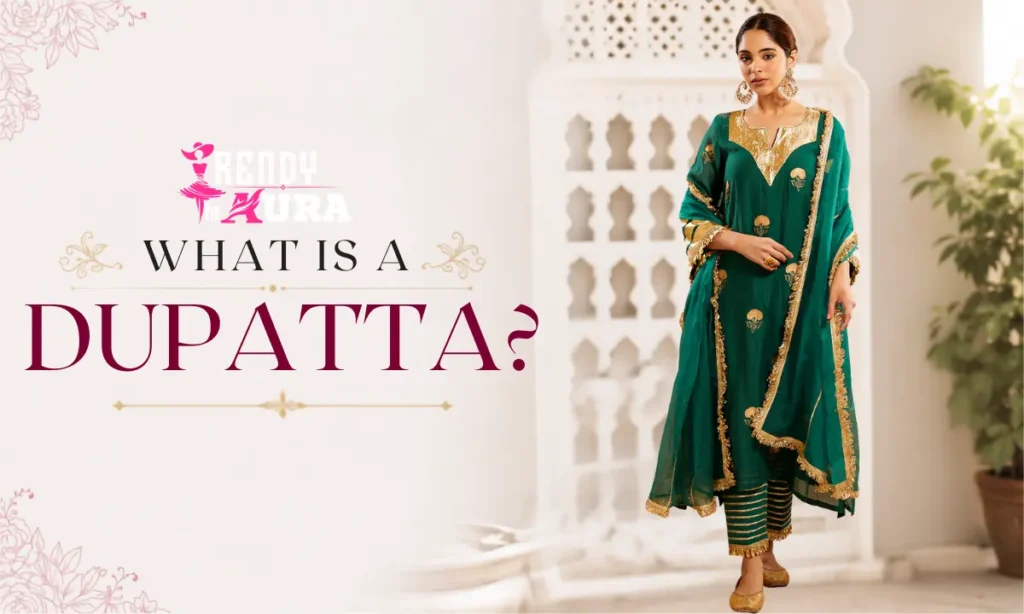
A dupatta is one of the most recognizable elements of traditional South Asian clothing. At first glance, it may look like a long scarf, but its role goes far beyond being a simple fashion accessory. It can add colour, elegance, modesty, movement and cultural character to an outfit.
Commonly worn with salwar kameez, lehenga choli, churidar suits and Anarkali dresses, the dupatta has remained relevant even as fashion trends have changed. Traditional handwoven dupattas continue to be valued, while chiffon, organza, net and contemporary embroidered designs have made the garment equally popular in modern fashion.
From a lightweight cotton dupatta worn on an ordinary summer day to an elaborately embroidered bridal dupatta, this versatile piece of fabric can completely change the appearance of an outfit.
What Is a Dupatta?
A dupatta is a long rectangular piece of fabric traditionally draped around the shoulders, neck, chest or head. It is mainly associated with South Asian clothing and is particularly common in India and Pakistan, while variations are also worn elsewhere across the region.
Dupattas can be simple enough for everyday clothing or highly decorative for weddings and festivals. Depending on the design, they may feature embroidery, zari, sequins, prints, handwoven patterns, mirror work, tassels, lace or decorative borders.
Although traditionally connected with modesty and cultural customs, the dupatta has evolved considerably. Today, it can function as a traditional garment, fashion accessory, statement piece or styling layer.
Dupatta at a Glance
| Feature | Details |
|---|---|
| Garment | Dupatta |
| Clothing Type | Long scarf-like drape |
| Common Shape | Long and rectangular |
| Region | South Asia |
| Commonly Worn With | Salwar kameez, lehenga, Anarkali, churidar and kurta sets |
| Common Fabrics | Cotton, silk, chiffon, georgette, organza and net |
| Traditional Purpose | Modesty, covering and completing an outfit |
| Modern Purpose | Fashion, styling and accessorizing |
| Other Names | Chunni, chunri and odhani, depending on region and context |
| Common Occasions | Daily wear, weddings, festivals, religious occasions and celebrations |
What Does Dupatta Mean?
In English, a dupatta is usually described as a long scarf, shawl-like drape or stole worn with South Asian clothing. However, none of these translations completely describes its cultural role.
The term comes through Hindi-Urdu usage and historically refers to a piece of cloth worn as an additional covering. Over generations, its purpose expanded from practical covering to an important part of traditional and ceremonial fashion.
A dupatta can therefore have several meanings at the same time. For one person it may simply complete a salwar suit, while for another it may represent tradition, celebration, modesty or family customs.
Is a Dupatta the Same as a Scarf?
No. A dupatta and scarf can look similar, but they are not exactly the same.
A scarf is a broad category of accessory that can be worn for warmth, protection or fashion. A dupatta is specifically associated with South Asian dress traditions and is generally larger than an ordinary fashion scarf.
| Dupatta | Scarf |
|---|---|
| Closely associated with South Asian clothing | Found in fashion worldwide |
| Usually long and relatively wide | Available in many shapes and sizes |
| Often paired with ethnic outfits | Can be paired with almost any clothing |
| Can have cultural or ceremonial importance | Usually practical or decorative |
| May cover shoulders, chest or head | Commonly worn around the neck or head |
| Often heavily embroidered for weddings | Usually lighter and simpler |
History of the Dupatta
The history of draped garments in the Indian subcontinent goes back centuries. Long pieces of unstitched fabric have been used in different forms for covering the upper body, shoulders and head throughout South Asian clothing history.
The modern dupatta developed through these changing clothing traditions. As regional styles evolved, communities created distinctive versions using locally produced textiles, embroidery, weaving and dyeing techniques.
Eventually, the dupatta became closely connected with garments such as salwar kameez and lehenga choli. Different regions developed their own versions, colours, decorative techniques and draping customs.
Today, the dupatta represents a combination of historical clothing traditions and constantly changing fashion.
Why Is the Dupatta Important in South Asian Culture?
The importance of a dupatta cannot be explained only through fashion. Depending on the region, family and occasion, it may communicate respect, modesty, tradition or celebration.
Covering the head with a dupatta is also practiced in some religious and ceremonial settings. At weddings, the bridal dupatta can become one of the most visually significant elements of the bride’s entire outfit.
At the same time, its meaning is not universal. The way a dupatta is worn and what it represents can vary considerably between communities, generations and individuals.
Different Names for a Dupatta
The garment may be known by different names across South Asia. These terms are sometimes used interchangeably, although their exact meanings and traditional styles can vary by region.
| Name | Common Association |
|---|---|
| Dupatta | Widely used general term |
| Chunni | Common informal term in North India and Punjab |
| Chunri | Often associated with colourful or ceremonial drapes |
| Odhani | Commonly associated with Rajasthan and Gujarat |
| Orna | Term commonly used in Bangladesh and some eastern regions |
| Veil | Approximate English description in certain contexts |
| Stole | Modern comparison, although not exactly the same garment |
How Long Is a Dupatta?
There is no single compulsory dupatta size. Dimensions depend on its purpose, fabric, outfit and styling method.
Many conventional dupattas are approximately 2 to 2.5 metres long, giving the wearer enough material to drape the fabric over the shoulders, across the chest or over the head. Bridal and heavily styled dupattas can differ considerably.
Width also varies. Wider dupattas provide greater coverage and dramatic draping, while narrow versions provide a lighter, more contemporary appearance.
What Is a Dupatta Used For?
A dupatta can serve both functional and decorative purposes. Traditionally, it provided additional coverage around the upper body and could be placed over the head.
In modern fashion, the same piece of fabric can become the central visual feature of an outfit. A plain kurta set, for example, can appear dramatically different when paired with a richly embroidered, printed or contrasting dupatta.
For bridal clothing, dupattas can frame the face, cover the head, create layers around a lehenga or provide dramatic movement in photographs.
Most Popular Types of Dupatta
India’s textile traditions have created numerous distinctive dupatta styles. Many are closely associated with particular regions and traditional craft techniques.
1. Phulkari Dupatta
Phulkari is strongly associated with Punjab and is famous for colourful embroidery. Floral and geometric patterns create a vibrant surface that can transform even a relatively simple outfit.
Phulkari dupattas work particularly well for Punjabi celebrations, weddings, festivals and traditional functions.
2. Banarasi Dupatta
Banarasi dupattas are known for their rich woven appearance and association with the textile traditions of Varanasi. Silk versions featuring zari and traditional motifs are especially popular for formal occasions.
A Banarasi dupatta can be paired with a relatively simple suit to create a luxurious festive look without requiring heavy decoration across the entire outfit.
3. Bandhani Dupatta
Bandhani, also called Bandhej, is a traditional tie-dye craft strongly associated with Gujarat and Rajasthan. Tiny tied sections create characteristic dotted patterns after dyeing.
Bright reds, pinks, yellows, greens and multicoloured combinations make Bandhani dupattas particularly suitable for festive clothing.
4. Chanderi Dupatta
Chanderi dupattas are admired for their lightweight feel and subtle sheen. They can offer a refined appearance without the visual heaviness associated with heavily embroidered fabrics.
They are suitable for festivals, traditional gatherings, family events and elegant ethnic outfits.
5. Organza Dupatta
Organza has become extremely popular in contemporary ethnic fashion. Its sheer appearance and slightly structured texture help create clean, graceful drapes.
Floral prints, embroidered borders and delicate embellishments are commonly used to make organza dupattas suitable for festive and wedding outfits.
6. Chiffon Dupatta
Chiffon dupattas are lightweight, soft and fluid. Because the fabric falls naturally around the body, it works well when a flowing silhouette is preferred.
Plain chiffon dupattas are practical for suits, while embellished versions can be used for parties and festive outfits.
7. Georgette Dupatta
Georgette provides fluid movement while generally offering more texture than chiffon. It can hold embroidery and decorative work while remaining relatively comfortable to drape.
It is commonly seen with party suits, Anarkali dresses and contemporary ethnic ensembles.
8. Net Dupatta
Net dupattas are particularly common in bridal and party fashion because their transparent structure allows embroidery and embellishments to remain visible without completely hiding the outfit underneath.
Stonework, sequins, embroidery and decorative borders can turn a simple net dupatta into an elaborate statement piece.
9. Cotton Dupatta
Cotton is among the most practical choices for everyday clothing. It is breathable, comfortable and suitable for warm weather.
Printed cotton dupattas can add colour to office wear, college outfits and everyday kurtas without making the outfit feel excessively formal.
10. Kalamkari Dupatta
Kalamkari dupattas are appreciated for their artistic patterns and traditional textile character. Depending on the technique, designs may be hand-painted or block-printed.
These dupattas are especially attractive when paired with plain kurtas because the artwork itself becomes the focus.
Types of Dupatta by Fabric
| Dupatta Fabric | Main Quality | Best For |
|---|---|---|
| Cotton | Breathable and comfortable | Daily and summer wear |
| Silk | Rich and luxurious | Weddings and festivals |
| Chiffon | Lightweight and flowing | Parties and casual ethnic wear |
| Georgette | Fluid and textured | Festive and party outfits |
| Organza | Sheer and structured | Contemporary festive wear |
| Net | Transparent and decorative | Bridal and wedding outfits |
| Velvet | Heavy and luxurious | Winter weddings |
| Chanderi | Lightweight with subtle shine | Festive occasions |
| Tissue | Shimmering and dressy | Weddings and celebrations |
Popular Dupatta Embellishments
A dupatta does not depend only on its fabric. Embroidery and surface decoration can completely change its appearance and occasion suitability.
| Embellishment | Appearance |
|---|---|
| Zari | Metallic traditional detailing |
| Zardozi | Rich raised embroidery |
| Gota Patti | Decorative metallic ribbon work |
| Mirror Work | Small reflective decorative pieces |
| Sequins | Sparkling festive surface |
| Resham Embroidery | Soft colourful threadwork |
| Lace Border | Delicate decorative edging |
| Tassels | Playful finishing at corners or edges |
| Beadwork | Detailed ornamental decoration |
| Block Printing | Repeated handcrafted motifs |
Dupatta with Salwar Kameez
The salwar kameez and dupatta combination is among the most familiar traditional outfits in South Asia. The kameez forms the main upper garment, the salwar provides the lower portion and the dupatta completes the ensemble.
For everyday wear, cotton and lightweight printed dupattas provide comfort. For weddings or celebrations, Banarasi, silk, organza, chiffon and embroidered dupattas can make the same basic silhouette appear much more formal.
Dupatta with Lehenga
A dupatta plays an especially important styling role with a lehenga choli. It may be draped over one shoulder, wrapped across the torso, placed over the head or arranged around both arms.
Bridal styling sometimes incorporates two dupattas. One may cover the head while another is draped around the body. This creates layers while allowing embroidery on different parts of the bridal outfit to remain visible.
Dupatta with Anarkali Suit
Anarkali suits have a flowing silhouette, so the choice of dupatta can influence the balance of the outfit.
A lightweight chiffon or organza dupatta allows the flare of the Anarkali to remain visible. Heavier Banarasi or embroidered dupattas can create a more formal appearance for weddings and festivals.
Traditional Ways to Wear a Dupatta
There is no single correct method of wearing a dupatta. Draping changes according to outfit, occasion, region and personal preference.
| Draping Style | Description | Suitable For |
|---|---|---|
| Both Shoulders | Fabric falls evenly from both shoulders | Everyday suits |
| One Shoulder | Dupatta hangs from one shoulder | Casual and festive looks |
| Around Neck | Draped loosely around the neck | Modern casual styling |
| Head Covering | Fabric covers head and shoulders | Religious or ceremonial settings |
| Front Draping | Fabric provides coverage across the chest | Traditional salwar suits |
| Lehenga Drape | Dupatta crosses the torso or waist | Weddings |
| One-Side Open Drape | Fabric falls freely along one side | Parties and celebrations |
| Double Dupatta | Two dupattas styled differently | Bridal outfits |
Modern Dupatta Styling
Contemporary styling has transformed the dupatta from a matching garment into a statement accessory.
Instead of choosing an identical colour, people increasingly use contrasting dupattas. A plain black, white or pastel suit can be paired with a colourful Bandhani, Phulkari or Banarasi dupatta to make the fabric the centre of attention.
Belts can also be placed over dupattas with lehengas, while asymmetric shoulder drapes and cape-like arrangements create fusion looks.
How to Choose the Right Dupatta
The ideal dupatta should complement the outfit rather than compete with every other element. Fabric, colour, embroidery and occasion should therefore be considered together.
| Occasion | Recommended Dupatta |
|---|---|
| Daily Wear | Cotton or lightweight printed dupatta |
| Office | Cotton, Chanderi or simple chiffon |
| College | Cotton, chiffon or printed styles |
| Festival | Bandhani, Phulkari or Banarasi |
| Wedding Guest | Organza, silk, georgette or embroidered dupatta |
| Bridal Wear | Net, silk, organza or heavily embroidered dupatta |
| Religious Visit | Comfortable, wider dupatta |
| Winter Function | Silk or velvet |
| Summer Function | Chiffon, organza or lightweight cotton |
Matching vs Contrast Dupatta
A matching dupatta creates a coordinated and polished appearance. It is particularly useful when the outfit already includes detailed embroidery or several colours.
A contrast dupatta creates a stronger visual statement. For example, a plain white suit can be paired with a multicoloured Phulkari dupatta, while a simple black suit can work with red, pink, mustard or jewel-toned designs.
The best choice depends on whether the outfit or the dupatta is intended to be the main visual focus.
Dupatta in Bridal Fashion
In bridal fashion, the dupatta often carries some of the most intricate craftsmanship in the entire ensemble. Bridal versions may include zari, sequins, crystals, pearls, beads, zardozi or embroidered borders.
Red remains strongly associated with traditional bridal dressing in many Indian communities, but modern brides also wear ivory, blush pink, peach, gold, maroon and pastel dupattas.
The double-dupatta style has also become prominent in elaborate bridal looks. One dupatta frames or covers the head, while another provides structure and decoration around the body.
Difference Between Dupatta and Stole
Although both are draped pieces of fabric, a stole is generally smaller and narrower than a traditional dupatta.
| Feature | Dupatta | Stole |
|---|---|---|
| Length | Usually longer | Usually shorter |
| Width | Generally wider | Narrower |
| Cultural Connection | Strong South Asian association | Global fashion accessory |
| Common Clothing | Salwar suits, lehengas, Anarkalis | Western and fusion outfits |
| Head Covering | Common in certain contexts | Less common |
| Bridal Use | Very common | Uncommon |
Dupatta as a Fashion Statement
One reason the dupatta remains relevant is its ability to change without losing its identity. Contemporary designers regularly experiment with prints, borders, fabrics, embroidery and draping techniques. Traditional textiles such as Bandhani, Phulkari, Banarasi and Kalamkari can therefore appear alongside modern organza, net and minimalist styles.
A dupatta can also help repeat an outfit differently. Changing only the dupatta can introduce a new colour, texture and overall mood without replacing the main garments.
Traditional vs Modern Dupatta
| Traditional Dupatta | Modern Dupatta |
|---|---|
| Often based on regional textile crafts | Often influenced by contemporary trends |
| Commonly paired with traditional suits | Used with ethnic and fusion clothing |
| Traditional motifs are common | Minimal and experimental patterns |
| Often worn for coverage and custom | Frequently used as a statement accessory |
| Handloom and handcrafted styles valued | Digital prints and modern fabrics also popular |
How to Take Care of a Dupatta
Care requirements depend primarily on fabric and embellishment. Everyday cotton dupattas are generally easier to maintain than silk, velvet, organza or heavily embroidered pieces.
Delicate and embellished dupattas should be stored carefully to prevent embroidery from catching on other garments. Heavy bridal pieces are better folded with protective material between layers instead of being tightly compressed.
Always follow the specific cleaning instructions provided for the fabric, particularly when the dupatta contains zari, beads, sequins or delicate embroidery.
Why Dupattas Remain Popular
The dupatta has survived major changes in South Asian fashion because it is remarkably adaptable. The same basic rectangular form can appear casual, traditional, luxurious, artistic or contemporary depending on the fabric and styling.
It also provides an accessible way to showcase regional craftsmanship. Phulkari embroidery, Bandhani dyeing, Banarasi weaving and other textile traditions can all be represented through a garment that is relatively easy to combine with modern clothing.
This combination of practicality, cultural connection and styling flexibility explains why the dupatta continues to remain relevant across generations.
Interesting Facts About Dupattas
- A dupatta can be used with both everyday and ceremonial clothing.
- Dupatta dimensions vary considerably according to fabric and intended drape.
- Phulkari dupattas are strongly associated with Punjab.
- Bandhani and Bandhej traditions are particularly associated with Gujarat and Rajasthan.
- Banarasi dupattas are known for rich woven designs and zari detailing.
- Cotton dupattas are popular for warm-weather everyday wear.
- Bridal outfits may include two differently styled dupattas.
- Modern dupattas can be worn with both traditional and fusion outfits.
- A contrasting dupatta can completely change the appearance of a plain suit.
- Dupattas continue to provide a canvas for regional weaving, dyeing, printing and embroidery traditions.
Conclusion
A dupatta is far more than a long scarf worn with traditional clothing. It is a versatile South Asian garment that combines fashion, textile craftsmanship, cultural customs and personal expression.
From breathable cotton and flowing chiffon to elaborate Phulkari embroidery and luxurious Banarasi weaving, every style offers a different appearance and purpose. It can complete a simple salwar kameez, become the focal point of a festive outfit or form an important part of bridal clothing.
Fashion continues to evolve, but the dupatta remains relevant because it evolves with it. Traditional craftsmanship and modern styling now exist side by side, allowing this centuries-old form of draped clothing to remain an important part of contemporary South Asian fashion.
FAQs
What is a dupatta?
A dupatta is a long rectangular piece of fabric traditionally worn with South Asian outfits such as salwar kameez, lehenga choli and Anarkali suits. It can be worn over the shoulders, chest or head.
What is a dupatta called in English?
There is no perfect English equivalent. It is commonly described as a long scarf, stole, shawl-like drape or veil depending on how it is being worn.
What is the purpose of a dupatta?
Traditionally, a dupatta provided additional coverage and could symbolize modesty or respect. Today it is also widely used as a fashion accessory and decorative part of ethnic clothing.
How long is a dupatta?
Many traditional dupattas are approximately 2 to 2.5 metres long, although actual dimensions vary depending on the design, outfit and intended draping style.
What outfits are worn with a dupatta?
Dupattas are commonly paired with salwar kameez, churidar suits, Anarkali suits, lehenga choli and modern kurta sets.
Which dupatta is best for daily wear?
Cotton and other lightweight fabrics are practical choices for everyday wear because they are breathable, comfortable and relatively easy to manage.
Which dupatta is best for weddings?
Banarasi silk, organza, net, georgette and heavily embroidered dupattas are popular for wedding outfits. The ideal choice depends on the lehenga or suit fabric and the desired level of decoration.
What is the difference between a dupatta and chunni?
The terms are often used interchangeably in everyday conversation. However, terminology and traditional associations can differ according to region and cultural context.
Can a dupatta be worn with Western clothes?
Yes. Modern fashion styling sometimes pairs dupattas with dresses, trousers, jackets and other fusion outfits. Printed and handloom dupattas are particularly suitable for creating Indo-Western looks.
Is a dupatta only worn in India?
No. Dupattas and closely related garments are worn across South Asia, particularly in India and Pakistan, as well as in Bangladesh, Nepal and South Asian communities around the world.
Also, Read About: How to Wear Dupatta on Anarkali Dress || Indie Dress to Impress Outfit Ideas || Galactic Glam Outfits Ideas For Dress to Impress || Movie Premiere Outfits Ideas || Pop Culture Dress to Impress Outfit Ideas

