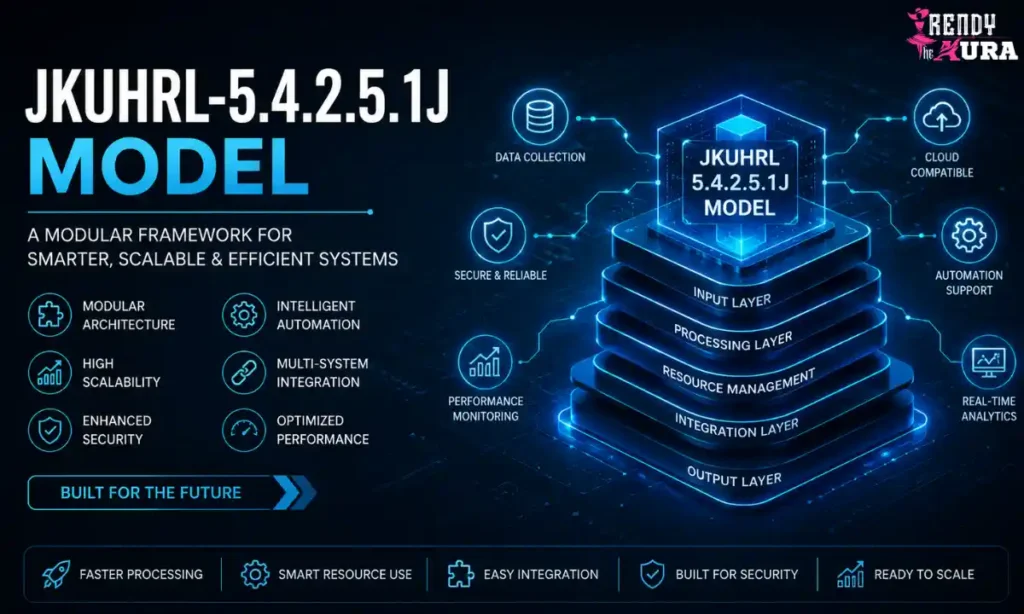
The JKUHRL-5.4.2.5.1J Model is a technical model identifier that has recently appeared in online discussions related to advanced computing systems, intelligent automation, and modular digital frameworks. While there is no officially published manufacturer documentation available in the public domain, the model is generally described as a structured framework designed to improve system efficiency, data processing, scalability, and integration across different digital environments.
Many technology enthusiasts believe that models with structured version numbers like JKUHRL-5.4.2.5.1J represent iterative development stages where each version introduces performance improvements, enhanced compatibility, and better resource management. Although its exact origin remains unclear, it has gained attention because of its modular architecture and potential use in modern software ecosystems.
Thetrendyaura.com explains everything currently known about the JKUHRL-5.4.2.5.1J Model.
JKUHRL-5.4.2.5.1J Model Overview
| Feature | Details |
|---|---|
| Model Name | JKUHRL-5.4.2.5.1J |
| Category | Advanced Technical Framework / Model Identifier |
| Primary Purpose | Intelligent Data Processing & System Optimization |
| Architecture | Modular |
| Scalability | High |
| Integration | Multi-System Compatible |
| Automation Support | Yes |
| Performance Focus | Speed, Stability & Resource Management |
| Security | Multi-layer Architecture |
| Suitable For | Enterprise Systems, Cloud Platforms, AI Workflows |
What is the JKUHRL-5.4.2.5.1J Model?
The JKUHRL-5.4.2.5.1J Model is commonly described as a modular computing framework that focuses on improving communication between different software components. Instead of relying on a single processing unit, it divides complex tasks into smaller modules that work together efficiently.
Its modular approach allows developers to update or replace individual components without affecting the entire system. This flexibility helps reduce maintenance time while improving overall performance.
Although official documentation is limited, the model is often associated with scalable digital infrastructures where efficiency, automation, and intelligent resource allocation are important.
Quick Facts About JKUHRL-5.4.2.5.1J Model
| Specification | Information |
|---|---|
| Framework Type | Modular Digital Model |
| Deployment | Flexible |
| Upgrade Support | Yes |
| Performance Optimization | Advanced |
| Cloud Compatibility | Supported |
| Multi-platform Support | Yes |
| Data Processing | High-Speed |
| Resource Management | Intelligent |
| Maintenance | Simplified |
| Future Scalability | Excellent |
Background of JKUHRL-5.4.2.5.1J Model
Unlike traditional software products that are backed by publicly available technical documentation, the JKUHRL-5.4.2.5.1J Model has emerged through online technology discussions and reference articles. Because of this, many details about its original developer or release timeline remain unavailable.
Even so, the model has attracted attention because it reflects several modern software engineering principles, including modular design, scalable architecture, and efficient resource utilization. These characteristics are increasingly important in cloud computing, AI-based applications, enterprise platforms, and distributed systems.
As organizations continue adopting digital transformation strategies, interest in flexible frameworks like JKUHRL-5.4.2.5.1J has also increased.
Key Features of JKUHRL-5.4.2.5.1J Model
Modular Architecture
One of the biggest strengths of this model is its modular design. Each module performs a specific function while remaining connected to the overall system. This makes updates and maintenance easier.
High Scalability
The framework is designed to support growing workloads. Additional resources can be integrated without rebuilding the complete infrastructure.
Intelligent Resource Allocation
Instead of distributing resources equally, the model prioritizes workloads based on processing requirements, improving overall efficiency.
Automation Support
Automation reduces repetitive manual work and allows faster execution of scheduled operations, monitoring tasks, and workflow management.
Multi-System Integration
The model supports communication between different software environments, making it suitable for organizations using multiple digital platforms.
Improved Reliability
By separating system functions into independent modules, failures in one component are less likely to impact the entire infrastructure.
Main Characteristics
| Characteristic | Description |
|---|---|
| Modular Design | Independent functional units |
| Flexible Deployment | Works across different environments |
| Stable Performance | Optimized workload handling |
| Expandable | Easy future upgrades |
| Automation Ready | Supports automated workflows |
| Fault Isolation | Reduces system-wide failures |
| Efficient Processing | Better utilization of resources |
Core Architecture of JKUHRL-5.4.2.5.1J Model
The architecture is generally described as a layered structure where each layer performs a dedicated responsibility. This separation improves system organization and simplifies long-term maintenance.
1. Input Layer
The input layer collects data from different sources, including applications, databases, cloud services, APIs, and connected systems. Its main responsibility is validating incoming information before forwarding it to the processing layer.
2. Processing Layer
This is the central component of the model. It analyzes incoming data, performs calculations, applies predefined rules, and prepares the final output. Most optimization techniques are implemented within this layer.
3. Resource Management Layer
This layer monitors CPU usage, memory allocation, storage availability, and workload distribution. Its objective is to prevent resource bottlenecks while maintaining consistent system performance.
4. Integration Layer
Different enterprise applications often need to exchange information. The integration layer manages communication between external systems while maintaining compatibility across multiple platforms.
5. Output Layer
The final layer delivers processed information to users, applications, dashboards, or connected systems. It ensures that output remains accurate, organized, and easy to consume.
Architecture Summary
| Layer | Primary Function |
|---|---|
| Input Layer | Collects and validates data |
| Processing Layer | Executes computations |
| Resource Layer | Optimizes hardware resources |
| Integration Layer | Connects multiple systems |
| Output Layer | Delivers final results |
Why is the JKUHRL-5.4.2.5.1J Model Different?
Many traditional frameworks are designed for a single purpose or limited computing environments. The JKUHRL-5.4.2.5.1J Model is commonly described as focusing on adaptability, allowing organizations to integrate multiple technologies within one structured framework.
Instead of requiring complete infrastructure replacement during upgrades, its modular architecture supports incremental improvements. This approach reduces operational downtime and simplifies maintenance.
Another notable aspect is its emphasis on intelligent resource allocation, enabling systems to use available hardware more efficiently while maintaining stable performance under changing workloads.
Potential Use Cases
| Industry | Possible Application |
|---|---|
| Cloud Computing | Resource optimization |
| Artificial Intelligence | Data processing workflows |
| Enterprise IT | System integration |
| Data Analytics | Large-scale processing |
| Manufacturing | Automated operations |
| Finance | Transaction management |
| Healthcare | Digital information systems |
| Research | Computational modeling |
Advantages at a Glance
- Modular and flexible architecture
- Simplified maintenance process
- High scalability for future growth
- Better resource utilization
- Supports automation workflows
- Improved system reliability
- Multi-platform compatibility
- Easier integration with enterprise environments
- Optimized processing efficiency
- Suitable for expanding digital infrastructures
Understanding the Version Number
The naming pattern 5.4.2.5.1J appears to follow a structured versioning format. While there is no official explanation, such numbering is commonly interpreted as representing different stages of development, feature updates, compatibility revisions, or maintenance releases.
The alphabetical suffix “J” may indicate a specific release branch, regional build, internal revision, or deployment variant. However, without official documentation, its exact meaning cannot be confirmed.
How Does the JKUHRL-5.4.2.5.1J Model Work?
The JKUHRL-5.4.2.5.1J Model is generally described as a modular processing framework that manages data through multiple interconnected layers. Instead of executing every operation within a single module, the framework separates different tasks into dedicated components.
This structured workflow helps improve performance, simplify maintenance, and make the system easier to scale as workloads increase.
JKUHRL-5.4.2.5.1J Model Workflow
| Step | Process | Purpose |
|---|---|---|
| 1 | Data Collection | Receives information from connected sources |
| 2 | Validation | Checks data accuracy and integrity |
| 3 | Processing | Executes calculations and business logic |
| 4 | Resource Allocation | Assigns CPU, memory, and storage efficiently |
| 5 | Integration | Shares processed data with other systems |
| 6 | Output | Delivers final results to applications or users |
Step 1: Data Collection
Every processing cycle begins with collecting data from one or more sources. These may include databases, cloud platforms, APIs, IoT devices, enterprise software, or user applications.
The model is designed to accept information from different formats, making it suitable for environments where multiple systems operate together.
Step 2: Data Validation
Before any processing begins, the incoming information is checked for completeness and consistency.
Validation helps remove duplicate entries, detect missing values, and prevent incorrect data from entering the processing engine.
This step improves the reliability of the overall workflow.
Step 3: Processing Engine
The processing engine is considered the core component of the model.
Here, collected information is analyzed according to predefined rules or computational logic. Depending on the implementation, this stage may include calculations, automation tasks, data transformation, or workload optimization.
The modular design allows different processing units to operate independently while remaining synchronized.
Step 4: Intelligent Resource Allocation
Instead of assigning equal resources to every task, the model dynamically allocates processing power based on workload priority.
This approach helps reduce unnecessary resource consumption and improves overall efficiency during high-demand operations.
Step 5: System Integration
Modern organizations often use several software platforms simultaneously.
The integration layer allows different applications to exchange information without interrupting existing workflows.
This improves communication between departments and reduces manual data transfer.
Step 6: Result Delivery
After processing is completed, the final output is delivered to dashboards, databases, applications, reports, or connected systems.
The output layer ensures that processed information remains organized and accessible for future use.
Main Components of the JKUHRL-5.4.2.5.1J Model
The framework consists of several important components working together to improve operational efficiency.
| Component | Function |
|---|---|
| Input Manager | Collects incoming data |
| Validation Engine | Verifies data quality |
| Processing Core | Executes calculations |
| Resource Manager | Optimizes hardware utilization |
| Integration Module | Connects external systems |
| Security Layer | Protects system operations |
| Output Module | Generates final results |
| Monitoring Unit | Tracks system health |
Technical Specifications
Although official hardware specifications are unavailable, the model is generally associated with the following capabilities.
| Specification | Details |
|---|---|
| Architecture | Modular |
| Scalability | High |
| Processing Method | Distributed |
| Deployment | Flexible |
| Multi-System Support | Yes |
| Automation | Supported |
| Cloud Ready | Yes |
| Security Layers | Multiple |
| Upgrade Support | Incremental |
| Reliability | High |
Performance Characteristics
The JKUHRL-5.4.2.5.1J Model focuses on delivering stable performance even when workloads increase.
Some commonly discussed characteristics include:
Faster Processing
Parallel task execution helps reduce waiting time for complex operations.
Better Resource Utilization
The framework intelligently distributes computing resources where they are needed most.
Improved Stability
Independent modules reduce the chances of complete system failure if one component encounters an issue.
Flexible Scaling
Organizations can expand system capacity without redesigning the complete architecture.
Performance Summary
| Feature | Benefit |
|---|---|
| Parallel Processing | Faster execution |
| Intelligent Scheduling | Efficient workload management |
| Dynamic Scaling | Handles increasing demand |
| Modular Design | Easier maintenance |
| Fault Isolation | Higher system stability |
| Optimized Resources | Better hardware utilization |
Advantages of the JKUHRL-5.4.2.5.1J Model
1. High Flexibility
The modular structure allows organizations to customize the framework according to their operational requirements.
2. Easy Maintenance
Individual modules can be updated without affecting the complete infrastructure.
3. Improved Efficiency
Resource optimization reduces unnecessary processing while maintaining consistent performance.
4. Better Reliability
Independent components minimize downtime during updates or unexpected failures.
5. Future Expansion
The architecture is designed to support additional modules as system requirements grow.
6. Cross-Platform Compatibility
The framework can integrate with multiple software environments, making it useful for enterprise ecosystems.
Benefits
| Benefit | Explanation |
|---|---|
| Faster Operations | Reduces execution time |
| Lower Maintenance | Easier updates |
| Better Reliability | Stable architecture |
| Resource Optimization | Efficient hardware usage |
| Flexible Integration | Connects multiple platforms |
| Long-Term Scalability | Supports future growth |
JKUHRL-5.4.2.5.1J Model vs Traditional Frameworks
| Feature | JKUHRL-5.4.2.5.1J Model | Traditional Framework |
|---|---|---|
| Architecture | Modular | Monolithic |
| Scalability | High | Limited |
| Maintenance | Easier | More Complex |
| Resource Allocation | Dynamic | Fixed |
| Integration | Multi-platform | Often Limited |
| Automation | Supported | Partial |
| Upgrades | Incremental | Large-scale updates |
| Fault Isolation | Better | Lower |
| Flexibility | High | Moderate |
Security Features
Security is considered an important aspect of modern digital frameworks.
The JKUHRL-5.4.2.5.1J Model is generally described as supporting multiple security layers that help protect system resources and maintain operational integrity.
Common security capabilities may include:
- Multi-layer protection
- Controlled access management
- Data validation
- Secure communication between modules
- Continuous monitoring
- Event logging
- Error detection
- Recovery support
Resource Management Strategy
Efficient resource allocation is one of the primary objectives of this model.
Instead of permanently assigning hardware resources, the framework continuously monitors workloads and reallocates computing power whenever required.
This strategy improves overall efficiency while reducing operational costs in large-scale environments.
| Resource | Management Method |
|---|---|
| CPU | Dynamic allocation |
| Memory | Intelligent optimization |
| Storage | Flexible utilization |
| Network | Balanced traffic distribution |
| Processing | Priority scheduling |
Why Businesses May Prefer Modular Models
Modern businesses often require systems that can evolve with changing technology.
A modular framework allows organizations to replace, improve, or expand individual components without interrupting the entire infrastructure. This reduces deployment time, minimizes maintenance costs, and improves long-term adaptability.
Key Highlights
- Modular architecture supports easier upgrades.
- Intelligent workload distribution improves efficiency.
- Dynamic resource allocation reduces waste.
- High scalability makes the framework suitable for expanding systems.
- Independent modules improve reliability.
- Integration capabilities simplify enterprise connectivity.
- Automation reduces repetitive operational tasks.
- Flexible deployment supports different computing environments.
Applications of the JKUHRL-5.4.2.5.1J Model
The JKUHRL-5.4.2.5.1J Model is generally discussed as a flexible framework that can support multiple digital environments. While there is no official documentation confirming specific implementations, its modular design and scalable architecture make it conceptually suitable for a wide range of industries.
Below are some of the most common application areas where frameworks with similar capabilities are used.
Application Overview
| Industry | Possible Use |
|---|---|
| Cloud Computing | Resource optimization |
| Artificial Intelligence | Data processing |
| Enterprise IT | System integration |
| Manufacturing | Process automation |
| Healthcare | Digital records management |
| Banking & Finance | Secure transaction processing |
| Education | Learning management systems |
| Logistics | Supply chain monitoring |
| Research | Large-scale data analysis |
| E-commerce | Customer data management |
Cloud Computing
Cloud platforms require systems that can efficiently allocate computing resources while handling thousands of simultaneous operations.
The modular architecture of the JKUHRL-5.4.2.5.1J Model makes it suitable for cloud environments where scalability, workload balancing, and system stability are essential.
Possible Benefits
- Better server utilization
- Dynamic resource allocation
- Reduced operational delays
- Easier infrastructure scaling
Artificial Intelligence
AI applications process large volumes of structured and unstructured data.
A modular framework can separate different AI tasks, such as data preparation, model execution, and result generation, making the overall workflow more organized and efficient.
AI Applications
| Area | Purpose |
|---|---|
| Machine Learning | Model execution |
| Data Analysis | Pattern recognition |
| Computer Vision | Image processing |
| NLP | Text processing |
| Recommendation Systems | Personalized suggestions |
Enterprise Software
Large organizations often use multiple business applications.
The JKUHRL-5.4.2.5.1J Model may help these systems exchange information more efficiently through centralized integration mechanisms.
Examples include:
- ERP software
- CRM platforms
- Inventory management
- Payroll systems
- Customer support platforms
Manufacturing Industry
Modern factories rely heavily on automation.
A modular framework can coordinate different production systems while monitoring equipment performance and resource usage.
Manufacturing Benefits
- Automated workflows
- Production monitoring
- Predictive maintenance
- Better resource planning
Healthcare Systems
Healthcare organizations generate large amounts of patient information every day.
A structured processing framework may help hospitals organize medical records, laboratory reports, appointment systems, and digital documentation.
Potential Healthcare Uses
| Function | Benefit |
|---|---|
| Patient Records | Organized storage |
| Appointment Systems | Faster scheduling |
| Laboratory Reports | Centralized access |
| Medical Analytics | Improved reporting |
| Hospital Management | Better coordination |
Banking and Financial Services
Banks require reliable digital systems capable of processing thousands of secure transactions every second.
Frameworks with modular architecture are commonly preferred because they simplify maintenance while improving reliability.
Possible applications include:
- Payment processing
- Fraud monitoring
- Customer verification
- Digital banking platforms
- Financial reporting
Education Platforms
Online education systems continue expanding worldwide.
A modular architecture allows learning platforms to manage courses, student records, examinations, and digital resources through separate yet connected modules.
Educational Applications
| Module | Function |
|---|---|
| Student Database | Information management |
| Online Classes | Virtual learning |
| Examination System | Digital assessments |
| Result Processing | Score calculation |
| Learning Analytics | Performance tracking |
Logistics and Supply Chain
Logistics companies depend on real-time tracking and efficient communication between multiple locations.
A scalable framework can improve coordination between warehouses, transportation systems, and inventory databases.
Benefits
- Shipment tracking
- Inventory updates
- Delivery monitoring
- Warehouse management
- Fleet coordination
Data Analytics
Organizations collect enormous volumes of business data every day.
The JKUHRL-5.4.2.5.1J Model’s layered structure may support efficient processing, analysis, and reporting of large datasets.
Major Benefits of the JKUHRL-5.4.2.5.1J Model
High Scalability
One of the strongest advantages is its ability to support increasing workloads without requiring a complete redesign.
Organizations can expand their infrastructure gradually as business needs grow.
Improved Performance
The model distributes workloads intelligently across different modules, reducing unnecessary processing delays.
Better Reliability
Independent modules reduce the impact of hardware or software failures.
If one component experiences an issue, other modules can continue operating.
Easy Maintenance
Administrators can update individual modules instead of shutting down the complete system.
This reduces maintenance time and operational interruptions.
Automation Support
Automation reduces manual work while improving consistency and operational efficiency.
Challenges of the JKUHRL-5.4.2.5.1J Model
Although modular frameworks offer many advantages, they also present certain implementation challenges.
Limited Official Documentation
One of the biggest limitations is the lack of publicly available technical documentation regarding the JKUHRL-5.4.2.5.1J Model itself.
Organizations would require verified technical specifications before considering real-world deployment.
Complex Initial Configuration
Large modular systems often require careful planning during installation.
Improper configuration can reduce overall performance.
Higher Learning Curve
Developers unfamiliar with modular architectures may need additional training before managing complex deployments.
Integration Planning
Connecting multiple enterprise systems requires proper interface design and compatibility testing.
Infrastructure Costs
Large-scale implementations may require additional hardware resources during the initial deployment phase.
Common Limitations
| Limitation | Impact |
|---|---|
| Limited Documentation | Difficult evaluation |
| Configuration Complexity | Longer setup time |
| Training Requirements | Learning curve |
| Integration Challenges | Additional planning |
| Initial Investment | Higher deployment cost |
Security Considerations
Security remains one of the most important aspects of any enterprise framework.
A modular architecture should include multiple protective mechanisms to safeguard sensitive information.
Recommended security practices include:
- User authentication
- Role-based access control
- Data encryption
- Secure API communication
- Continuous monitoring
- Activity logging
- Backup procedures
- Disaster recovery planning
Best Practices for Implementation
Organizations planning to adopt modular frameworks should follow several best practices.
Start with Clear Objectives
Define business requirements before selecting system architecture.
Deploy Modules Gradually
Instead of implementing everything simultaneously, add components step by step.
Monitor Performance
Track CPU usage, memory consumption, response time, and workload distribution regularly.
Keep Software Updated
Regular updates improve stability and reduce security risks.
Train Technical Teams
Ensure administrators understand system architecture before deployment.
Best Practices Table
| Practice | Purpose |
|---|---|
| Requirement Analysis | Better planning |
| Modular Deployment | Easier implementation |
| Continuous Monitoring | Stable performance |
| Security Updates | Better protection |
| Staff Training | Efficient management |
Who Can Benefit from the JKUHRL-5.4.2.5.1J Model?
The framework is best suited for organizations that require scalable, modular, and efficient digital systems.
Potential Users
- Enterprise businesses
- Cloud service providers
- AI development companies
- Manufacturing industries
- Educational institutions
- Healthcare organizations
- Financial institutions
- Research centers
- Government departments
- Large IT companies
Is the JKUHRL-5.4.2.5.1J Model Worth Considering?
From a conceptual perspective, the JKUHRL-5.4.2.5.1J Model aligns with many modern software engineering principles, including modular design, scalability, automation, and resource optimization. However, because there is no verified official documentation or manufacturer specification publicly available, any evaluation should be approached with caution.
For organizations exploring similar frameworks, the underlying concepts remain valuable, but adoption decisions should always be based on verified technical documentation and practical testing.
Future Scope of the JKUHRL-5.4.2.5.1J Model
As organizations continue adopting cloud computing, artificial intelligence, automation, and distributed systems, the demand for modular and scalable frameworks is expected to increase. Concepts associated with the JKUHRL-5.4.2.5.1J Model—such as flexible architecture, intelligent resource management, and system integration—align with these modern technology trends.
Although the exact roadmap of this model is unknown, frameworks with similar characteristics are likely to play an important role in future enterprise solutions.
Future Possibilities
| Area | Expected Development |
|---|---|
| Cloud Computing | Better workload optimization |
| Artificial Intelligence | Faster model processing |
| Enterprise Software | Improved integration |
| Cybersecurity | Stronger protection layers |
| Automation | Smarter workflow management |
| Big Data | Faster analytics processing |
| IoT | Enhanced device communication |
| Edge Computing | Lower processing latency |
Emerging Technology Trends
Several modern technologies follow principles similar to those associated with the JKUHRL-5.4.2.5.1J Model.
Artificial Intelligence Integration
AI-powered systems continue to improve automation, prediction, and decision-making.
Future modular frameworks may integrate AI directly into processing engines to optimize resource allocation and workflow management.
Cloud-Native Architecture
Businesses increasingly deploy applications on cloud infrastructure.
Future versions of modular frameworks are expected to improve cloud scalability, reliability, and disaster recovery.
Edge Computing
Instead of processing all information in centralized servers, edge computing performs calculations closer to connected devices.
This approach reduces latency and improves response time.
Intelligent Automation
Automation technologies continue replacing repetitive manual operations.
Future frameworks may include self-monitoring capabilities that automatically optimize performance without human intervention.
Potential Improvements
| Improvement | Benefit |
|---|---|
| AI-Based Optimization | Smarter resource management |
| Better Scalability | Supports larger workloads |
| Advanced Security | Improved protection |
| Faster Processing | Reduced execution time |
| Automated Monitoring | Less manual administration |
| Enhanced Compatibility | Easier system integration |
Common Myths About the JKUHRL-5.4.2.5.1J Model
Because publicly available information about the model is limited, several misconceptions have appeared online.
Myth 1: It Is an Official International Standard
Reality: There is no publicly available evidence confirming that the JKUHRL-5.4.2.5.1J Model is an internationally recognized technical standard.
Myth 2: It Replaces Every Enterprise Framework
Reality: Modular frameworks are designed to complement specific business requirements rather than replace every existing system.
Myth 3: Installation Is Simple
Reality: Large enterprise frameworks usually require detailed planning, testing, and configuration.
Myth 4: It Eliminates All Maintenance
Reality: Even advanced modular systems require regular updates, monitoring, backups, and security improvements.
Myth 5: It Works Automatically Without Configuration
Reality: Proper implementation, resource planning, and system management remain essential for achieving good performance.
Expert Tips Before Using Similar Frameworks
Organizations considering modular digital architectures should follow several practical recommendations.
Verify Documentation
Always rely on official technical documentation before implementing any enterprise framework.
Test Before Deployment
Pilot testing helps identify configuration issues before full-scale implementation.
Plan Resource Allocation
Estimate CPU, memory, storage, and networking requirements in advance.
Maintain Regular Backups
Backups help reduce the risk of data loss during updates or unexpected failures.
Keep Security Updated
Install software updates regularly and monitor systems for vulnerabilities.
Implementation Checklist
| Task | Status |
|---|---|
| Requirement Analysis | Recommended |
| Documentation Review | Essential |
| Infrastructure Planning | Required |
| Security Assessment | Important |
| Pilot Testing | Recommended |
| Performance Monitoring | Continuous |
| Backup Strategy | Essential |
| Staff Training | Recommended |
FAQs
What is the JKUHRL-5.4.2.5.1J Model?
The JKUHRL-5.4.2.5.1J Model is a technical model identifier discussed online as a modular framework focused on system optimization, resource management, and scalable computing. However, there is no officially verified public documentation confirming its origin or specifications.
Is the JKUHRL-5.4.2.5.1J Model an official product?
At present, no official manufacturer or standards organization has publicly confirmed detailed information about this model.
What is the main purpose of the model?
It is generally described as improving system efficiency, modularity, automation, and workload management.
What industries could use similar frameworks?
Industries such as cloud computing, healthcare, finance, manufacturing, logistics, education, artificial intelligence, and enterprise IT commonly benefit from modular architectures.
Does the model support cloud computing?
Based on publicly available descriptions, it is generally associated with cloud-compatible architectures and scalable deployment.
What are its major advantages?
Some commonly mentioned benefits include:
Modular architecture
High scalability
Better resource utilization
Easier maintenance
Improved reliability
Multi-system integration
Are there any limitations?
Yes. The biggest limitation is the absence of verified official documentation, making it difficult to evaluate technical capabilities with certainty.
Is it suitable for small businesses?
Small businesses may benefit from modular frameworks, but implementation should depend on actual business requirements and available technical resources.
Conclusion
The JKUHRL-5.4.2.5.1J Model has attracted attention because of its reported focus on modular architecture, intelligent resource management, and scalable system design. While the available information suggests that it reflects many modern software engineering principles, there is no publicly verified official documentation confirming its exact specifications, developer, or commercial implementation.
If you are researching this model, it is best to treat it as an emerging or unofficial technical concept rather than a fully documented product. For organizations evaluating similar technologies, relying on official documentation, vendor support, and real-world testing is essential before making deployment decisions.
Overall, the architectural ideas associated with the JKUHRL-5.4.2.5.1J Model flexibility, scalability, automation, and efficient resource management remain valuable concepts for building modern digital systems.
Also, Read About: FOK959S-M Model || Where Can I Buy 1.5f8-p1uzt || About Qushvolpix Brand || Techslassh com