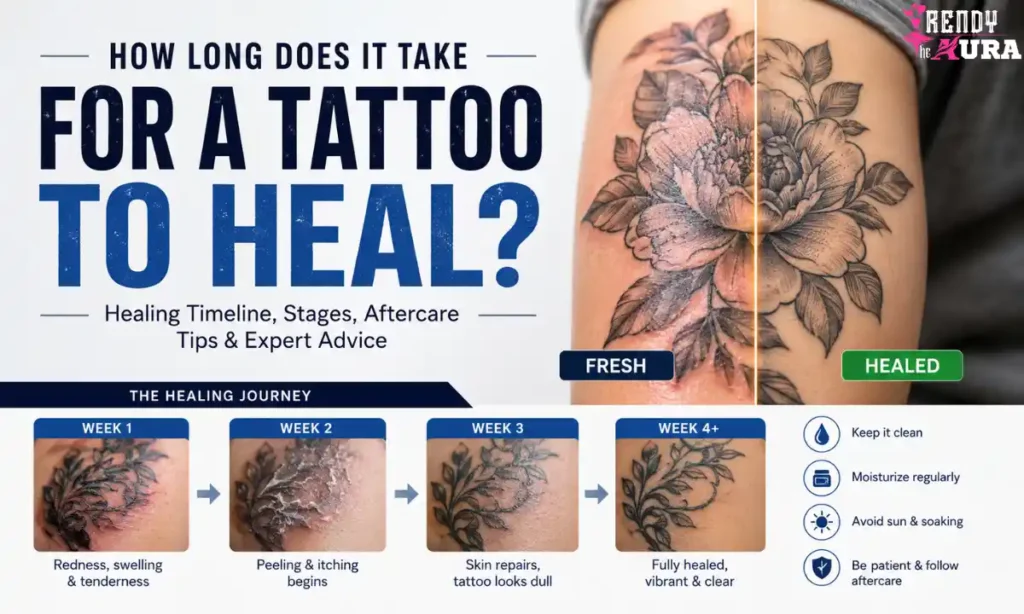
Getting a tattoo is an exciting experience, but taking care of it afterward is just as important as choosing the right design. A fresh tattoo is essentially a controlled wound, and your skin needs time to repair itself properly. Many people expect their tattoo to heal within a few days, but the healing process happens in stages and can take much longer than expected.
If you have recently been tattooed or are planning to get one, understanding the healing timeline can help you avoid infections, protect the artwork, and maintain vibrant colors for years. In this guide, you’ll learn how long tattoo healing really takes, what happens during each stage, how to speed up recovery safely, and which warning signs should never be ignored.
How Long Does It Take for a Tattoo to Heal?
Most tattoos take 2 to 4 weeks for the outer layer of skin to heal. However, the deeper layers of the skin usually continue healing for 2 to 6 months, depending on the tattoo’s size, location, your skin type, overall health, and how well you follow aftercare instructions.
Smaller tattoos generally recover faster because they involve less skin trauma, while larger tattoos with heavy shading or detailed color work often require more time. Tattoos on hands, feet, fingers, elbows, and knees also tend to heal more slowly because these areas move frequently and experience constant friction.
The healing process is different for everyone, so comparing your tattoo with someone else’s isn’t always helpful. Proper cleaning, moisturizing, and protecting the tattoo from sunlight and water are the biggest factors that influence healing.
Tattoo Healing Time at a Glance
| Healing Stage | Average Healing Time |
|---|---|
| Redness & swelling | 1–3 days |
| Oozing & tenderness | 1–3 days |
| Peeling begins | 4–7 days |
| Itching stage | 1–3 weeks |
| Outer skin heals | 2–4 weeks |
| Inner skin fully heals | 2–6 months |
Tattoo Healing Timeline (Day-by-Day)
The healing process changes every few days. Knowing what to expect helps you identify normal healing and recognize when something may be wrong.
Days 1–3: Fresh Tattoo Stage
During the first few days, your tattoo may look bright, slightly swollen, and feel sore. It’s normal to notice small amounts of clear fluid, plasma, or tiny spots of blood. This is your body’s natural response to skin injury.
At this stage, gently wash the tattoo with lukewarm water and a fragrance-free cleanser. Pat it dry with a clean towel instead of rubbing, then apply a thin layer of the moisturizer recommended by your tattoo artist. Avoid scratching or touching the tattoo with dirty hands.
Days 4–7: Peeling Begins
Around the fourth day, the tattoo usually starts to peel. Thin flakes of colored skin may come off, similar to peeling after a mild sunburn. This is completely normal and does not mean your tattoo is fading.
You may also notice mild itching during this period. Although scratching can be tempting, it can damage the healing skin and remove ink prematurely. Continue moisturizing regularly to reduce dryness and discomfort.
Week 2: Itching and Dryness
By the second week, most of the peeling slows down, but itching often becomes more noticeable. The tattoo may appear dull or slightly cloudy because a thin layer of new skin is forming over the ink.
Many people think their tattoo is fully healed at this point, but the deeper skin layers are still repairing themselves. Continue your aftercare routine even if the tattoo looks almost normal.
Weeks 3–4: Surface Healing
Most of the visible healing is complete by the third or fourth week. The skin usually feels smooth again, and redness has disappeared. The tattoo’s colors also begin looking brighter as the dead skin flakes fall away.
Although the surface looks healed, avoid excessive sun exposure, swimming, or harsh skincare products until your tattoo artist confirms the healing process is complete.
Tattoo Healing Stages Explained
Understanding each healing stage helps you know what’s normal and when to seek medical advice.
| Stage | What Happens |
|---|---|
| Stage 1 | Redness, swelling, tenderness, and mild fluid release |
| Stage 2 | Peeling, dryness, and light scabbing begin |
| Stage 3 | Itching increases as new skin develops |
| Stage 4 | Surface skin heals and tattoo becomes clearer |
| Stage 5 | Deeper skin continues rebuilding over the next few months |
What Affects Tattoo Healing Time?
No two tattoos heal exactly the same. Several factors determine how quickly your skin recovers and how well your tattoo retains its color and detail.
Tattoo Size
Small tattoos usually heal faster because they cover less skin. Large sleeves, back pieces, or full-leg tattoos create more trauma to the skin and naturally require a longer recovery period.
Tattoo Placement
Body parts that move constantly or rub against clothing tend to heal more slowly. Hands, fingers, feet, ankles, knees, elbows, and ribs often need extra care because friction can delay healing.
Skin Type
Dry skin may peel more heavily and require frequent moisturizing, while oily skin can sometimes trap sweat and bacteria if not cleaned properly. Healthy, well-hydrated skin generally heals more efficiently.
Tattoo Style
Fine-line tattoos often recover faster than heavily shaded, realistic, or full-color tattoos because less ink is placed into the skin. Dense blackwork and colorful designs may remain tender for a longer period.
Overall Health
Your body’s natural healing ability plays a major role. People who stay hydrated, eat nutritious foods, sleep well, and avoid smoking generally experience smoother tattoo healing than those with weakened immune systems or poor lifestyle habits.
Signs Your Tattoo Is Healing Normally
It’s common to worry that something is wrong during the healing process. Fortunately, many symptoms that look unusual are actually part of normal recovery.
Healthy tattoo healing usually includes:
- Mild redness for the first few days.
- Slight swelling around the tattooed area.
- Clear fluid or plasma during the first 24–48 hours.
- Peeling similar to dry or sunburned skin.
- Mild itching after the first week.
- Temporary dull appearance before colors become vibrant again.
- Light flaking without excessive pain.
These signs usually improve gradually. As long as the tattoo becomes less painful over time and the skin continues to recover, your healing process is likely on track.
Tattoo Aftercare Guide: How to Help Your Tattoo Heal Properly
Proper aftercare is the most important part of the healing process. Even a beautifully designed tattoo can lose its sharpness if it isn’t cared for correctly. Following a simple daily routine helps reduce the risk of infection, protects the ink, and allows your skin to heal naturally.
Tattoo Aftercare Timeline
| Time After Tattoo | What You Should Do |
|---|---|
| First 24 hours | Keep the bandage on as advised by your tattoo artist. |
| Days 1–3 | Wash gently and apply a thin layer of moisturizer. |
| Days 4–14 | Continue moisturizing and avoid scratching or picking. |
| Weeks 2–4 | Protect the tattoo from sunlight and excessive friction. |
| After 4 weeks | Resume most normal activities if the tattoo is fully healed. |
How to Care for a New Tattoo
A few simple habits can make a big difference in how your tattoo looks once it has healed. Consistency is more important than using expensive skincare products.
Wash Your Tattoo Gently
Clean your tattoo two or three times a day using lukewarm water and a mild, fragrance-free soap. Wash away any dirt, sweat, or dried plasma without scrubbing the skin. After washing, gently pat the area dry with a clean, soft towel instead of rubbing it.
Keep the Tattoo Moisturized
Once the tattoo is dry, apply a thin layer of tattoo aftercare lotion or a fragrance-free moisturizer. Keeping the skin hydrated reduces itching, minimizes cracking, and supports healthy healing. Avoid applying thick layers because excessive moisture can slow recovery.
Wear Loose Clothing
Tight clothing can rub against the tattoo, causing irritation and discomfort. During the first few weeks, choose loose, breathable fabrics that allow air to circulate around the healing skin.
Stay Hydrated
Healthy skin heals faster when your body is well hydrated. Drinking enough water every day helps maintain skin elasticity and supports your body’s natural repair process.
Eat a Nutrient-Rich Diet
Foods rich in protein, vitamins A and C, zinc, and healthy fats help your skin rebuild damaged tissue. Including fruits, vegetables, lean protein, eggs, fish, nuts, and whole grains in your diet can support faster healing.
Things You Should Avoid During Tattoo Healing
Certain activities can slow healing or even damage your tattoo. Avoiding these common mistakes will help preserve both the design and your skin.
Do Not Scratch or Pick Scabs
As your tattoo heals, small scabs and peeling skin may develop. Picking or scratching them can pull ink from the skin, leave scars, and increase the risk of infection. Let the skin shed naturally.
Avoid Swimming
Swimming pools, lakes, rivers, hot tubs, and the ocean contain bacteria and chemicals that may irritate a fresh tattoo. Keep your tattoo out of water until the skin has completely healed.
Stay Out of Direct Sunlight
Fresh tattoos are highly sensitive to UV rays. Too much sunlight can fade the ink, irritate healing skin, and increase discomfort. Keep the tattoo covered when outdoors during the healing period.
Don’t Use Harsh Skincare Products
Avoid products containing alcohol, strong fragrances, exfoliating acids, retinoids, or bleaching agents. These ingredients may dry out or irritate healing skin and interfere with recovery.
Avoid Tight Bandages
After the initial dressing is removed, your tattoo needs airflow. Rewrapping it without your tattoo artist’s advice can trap moisture and bacteria, increasing the chance of infection.
How to Make a Tattoo Heal Faster
While you can’t dramatically speed up your body’s natural healing process, you can create the right conditions for healthy recovery.
Best Practices for Faster Healing
| Tip | Why It Helps |
|---|---|
| Clean the tattoo regularly | Reduces bacteria and infection risk |
| Moisturize daily | Prevents excessive dryness and cracking |
| Stay hydrated | Supports healthy skin repair |
| Eat healthy foods | Provides nutrients for tissue recovery |
| Get enough sleep | Helps the body repair damaged skin |
| Avoid smoking | Improves blood circulation and healing |
| Protect from sunlight | Prevents fading and irritation |
Following these habits consistently often leads to smoother healing and better long-term tattoo appearance.
Does Tattoo Size Affect Healing Time?
Yes. Larger tattoos usually take longer to heal because they cover a greater area of damaged skin. Full sleeves, back pieces, chest tattoos, and leg tattoos often remain tender for several weeks.
Small tattoos with simple outlines generally recover more quickly, although proper aftercare is still essential regardless of size.
Does Tattoo Placement Affect Healing?
The location of your tattoo has a major impact on recovery. Areas that experience frequent movement, friction, or stretching often heal more slowly than flatter parts of the body.
| Body Area | Healing Difficulty |
|---|---|
| Upper arm | Easy |
| Shoulder | Easy |
| Thigh | Easy |
| Back | Easy to Moderate |
| Chest | Moderate |
| Ribs | Moderate to Slow |
| Wrist | Moderate |
| Hand | Slow |
| Fingers | Slow |
| Foot | Slow |
| Ankle | Slow |
| Elbow | Slow |
| Knee | Slow |
These slower-healing areas often require extra patience because movement and rubbing can delay recovery.
Can You Shower After Getting a Tattoo?
Yes. Most tattoo artists recommend taking a gentle shower rather than soaking the tattoo. Use lukewarm water and avoid directing high-pressure water onto the tattoo. After showering, gently pat the area dry and apply a thin layer of moisturizer.
When Can You Swim After Getting a Tattoo?
It’s generally best to wait at least 2 to 4 weeks, or until the tattoo has fully healed on the surface. Swimming too early increases the risk of infection and may affect how well the ink settles into the skin.
Can You Exercise During Tattoo Healing?
Light exercise is usually acceptable if it doesn’t stretch or rub the tattooed area. However, intense workouts that produce heavy sweating or repeated friction should be avoided for the first few days. If your tattoo is on a joint or an area that moves frequently, giving it extra rest can improve healing.
Can You Drink Alcohol After Getting a Tattoo?
Many tattoo artists recommend avoiding alcohol for the first 24 to 48 hours after getting tattooed. Alcohol can thin the blood, which may increase bleeding immediately after the procedure and potentially affect the early healing process. Staying hydrated with water is a better choice during the first couple of days.
Can You Sleep on a Fresh Tattoo?
Sleeping directly on a new tattoo can create pressure, friction, and irritation. During the first few nights, try to sleep in a position that keeps the tattoo from rubbing against your bed or clothing. Using clean bedsheets also helps reduce the risk of introducing bacteria to the healing skin.
Signs of an Infected Tattoo
A small amount of redness, swelling, and tenderness is completely normal during the first few days after getting a tattoo. However, if these symptoms become worse instead of improving, it may indicate an infection. Early treatment is important because untreated skin infections can lead to more serious complications.
If you notice severe pain, increasing redness, thick yellow or green discharge, a foul smell, or develop a fever, contact a healthcare professional as soon as possible instead of trying to treat it yourself.
Normal Tattoo Healing vs Tattoo Infection
The table below makes it easier to understand the difference between normal healing and a possible infection.
| Normal Healing | Possible Infection |
|---|---|
| Mild redness that fades within a few days | Redness spreads or becomes darker |
| Light swelling | Severe or increasing swelling |
| Clear plasma during the first 1–2 days | Yellow, green, or foul-smelling pus |
| Mild itching | Intense itching with severe pain |
| Thin peeling skin | Thick scabs with excessive discharge |
| Slight warmth | Skin feels extremely hot |
| Gradual improvement | Symptoms worsen over time |
| No fever | Fever or chills develop |
Common Tattoo Healing Mistakes
Many tattoo problems are caused by simple aftercare mistakes rather than the tattoo itself. Avoiding these errors can help your tattoo heal smoothly and keep the design looking sharp.
Over-Moisturizing
Using too much lotion can trap moisture against the skin, making it difficult for the tattoo to breathe. Apply only a thin layer so the skin stays hydrated without becoming greasy.
Ignoring Aftercare Instructions
Every tattoo artist provides aftercare advice based on the tattoo’s size, style, and placement. Skipping cleaning or moisturizing can increase the chance of infection and uneven healing.
Picking Peeling Skin
Peeling is a natural part of healing. Pulling away loose skin or scabs before they fall off naturally may remove ink, create scars, and leave uneven patches in the tattoo.
Wearing Dirty or Tight Clothing
Fresh tattoos should stay as clean as possible. Dirty fabrics may introduce bacteria, while tight clothing can constantly rub against the tattoo and slow the healing process.
Too Much Sun Exposure
Ultraviolet (UV) rays are one of the biggest causes of tattoo fading. A fresh tattoo should be protected from direct sunlight until it has completely healed.
Resuming Normal Activities Too Soon
Returning to swimming, heavy workouts, or long hours in the sun before your tattoo has healed can increase irritation and delay recovery. Giving your skin enough time to heal is one of the best ways to protect your new tattoo.
Long-Term Tattoo Care
Healing doesn’t end after the first month. Keeping your tattoo healthy over the years helps preserve its detail, brightness, and color.
Moisturize your skin regularly to prevent excessive dryness, especially during colder months. Healthy skin keeps tattoo lines looking sharper and colors more vibrant.
Whenever your tattoo is exposed to sunlight, apply a broad-spectrum sunscreen with SPF 30 or higher. UV rays gradually fade tattoo ink, making sun protection one of the easiest ways to extend the life of your tattoo.
Drinking enough water, eating a balanced diet, and maintaining healthy skin habits also contribute to keeping tattoos looking fresh for many years.
FAQs
How long does it take for a tattoo to heal completely?
Most tattoos heal on the surface within 2 to 4 weeks, but the deeper layers of skin may take 2 to 6 months to fully recover.
Is tattoo peeling normal?
Yes. Peeling usually begins within the first week and is a natural part of the healing process. Avoid pulling or scratching the peeling skin.
Why is my tattoo itchy?
Itching happens because your skin is repairing itself. Mild itching is normal, but severe itching with pain, swelling, or discharge should be checked by a healthcare professional.
Can I shower after getting a tattoo?
Yes. You can shower with lukewarm water, but avoid soaking the tattoo in a bathtub, swimming pool, or hot tub until it has healed.
When can I swim after getting a tattoo?
Most people should wait at least 2 to 4 weeks or until the tattoo has fully healed on the surface before swimming.
Can I exercise with a new tattoo?
Light exercise is generally fine, but avoid activities that cause heavy sweating or excessive rubbing on the tattoo during the first few days.
Is redness around a tattoo normal?
Mild redness during the first few days is expected. If redness spreads or becomes more painful over time, it may be a sign of infection.
Can I scratch my tattoo if it itches?
No. Scratching can damage healing skin, remove ink, and increase the risk of infection. Moisturizing the tattoo can help reduce itching.
Will my tattoo look dull while healing?
Yes. Tattoos often appear cloudy or dull during healing because a thin layer of new skin covers the ink. The colors usually become brighter once healing is complete.
Does tattoo color affect healing time?
Heavily colored or densely shaded tattoos may take slightly longer to heal because more ink is deposited into the skin, but proper aftercare remains the most important factor.
Can smoking slow tattoo healing?
Yes. Smoking can reduce blood circulation and oxygen delivery to the skin, which may slow the body’s natural healing process.
Should I keep my tattoo covered all the time?
No. After removing the initial bandage according to your tattoo artist’s advice, your tattoo should be kept clean and allowed to breathe.
Conclusion
Getting a tattoo is only the first step the healing process determines how well your tattoo will look in the future. While the outer layer of skin usually heals within 2 to 4 weeks, complete healing takes much longer as the deeper layers continue repairing themselves. Following proper aftercare, avoiding common mistakes, and paying attention to any unusual symptoms can help your tattoo heal safely and maintain its original appearance.
Patience is essential during recovery. By cleaning the tattoo gently, moisturizing regularly, protecting it from sunlight, and allowing your skin enough time to heal, you’ll give your tattoo the best chance to stay vibrant and detailed for years to come.
Tattoo Healing Checklist
| Task | Recommended |
|---|---|
| Wash gently with fragrance-free soap | Yes |
| Apply a thin layer of moisturizer | Yes |
| Drink plenty of water | Yes |
| Wear loose clothing | Yes |
| Protect from direct sunlight | Yes |
| Avoid scratching or picking | Yes |
| Avoid swimming until healed | Yes |
| Use sunscreen after healing | Yes |
Also, Read About: Bridal Nail Art Designs 2026 || Does Cutting Hair Make It Grow Longer?